

For high-net-worth individuals and corporate travelers, the appeal of a luxury jet charter lies in unmatched privacy, flexibility, and personalized service. This means renting a high-end private aircraft for exclusive travel – a bespoke experience catering to wealthy clients, executives, celebrities, and VIPs. Unlike commercial flying, private aviation offers a level of comfort and convenience that redefines premium air travel. This blog explores the top services and features that distinguish elite private jet charters, presenting an insider’s guide aligned with the latest standards of excellence in private aviation.
First Class Private Aviation vs. Commercial First Class
In the realm of first-class private aviation, the experience goes far beyond what even top-tier commercial first class can provide. One significant difference is time efficiency. On a commercial flight, even first-class passengers must arrive early, clear security, and wait through the boarding and baggage claim process. By contrast, private flyers often arrive minutes before departure and avoid lines entirely. A private charter passenger can save four to six hours on a typical domestic trip by skipping the usual airport delays. Private jets also fly on your schedule – you set the departure time, and you can even change plans mid-trip. Another advantage is access: chartered jets can use over 5,000 airports in the U.S., versus the ~500 used by airlines. This means you land closer to your destination, reducing ground transfer times. The cabin environment itself is more conducive to work and relaxation. First-class on a commercial airline, while comfortable, is still a public space with potential noise or disruptions. In contrast, a private jet is your space – quiet, secure, and often equipped with conference seating, allowing confidential meetings or undisturbed rest. From a service standpoint, private aviation pampers you with personalized attention and complete privacy.
Travel Flexibility and Convenience
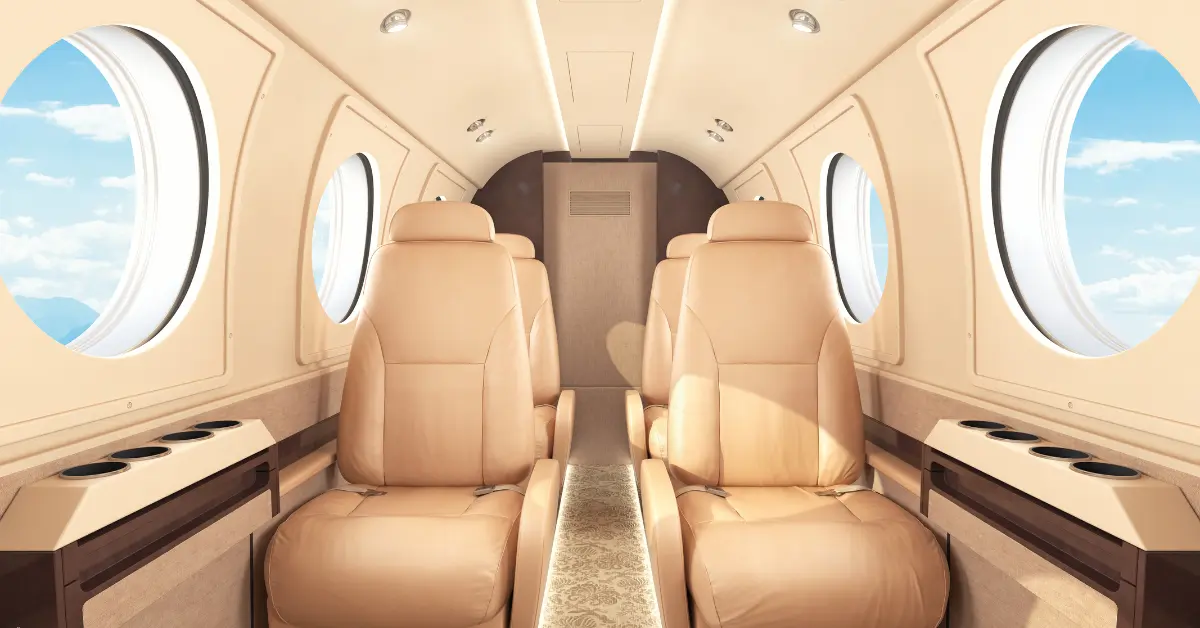
One of the most compelling advantages of luxury jet charter is the unparalleled flexibility it provides. Unlike commercial airlines with rigid schedules and limited routes, private jet charters cater entirely to your needs, offering true on-demand travel. Last-minute trips are not only possible—they are a hallmark of the service. Whether you need to depart within hours for an unexpected business meeting or arrange a spontaneous family getaway, private aviation makes it happen seamlessly. This flexibility extends to your itinerary, allowing for multi-stop trips, route changes mid-flight, or accommodating shifting business and leisure plans with ease. Private jets can access thousands of airports, including remote or hard-to-reach destinations that commercial flights cannot serve, bringing you closer to secluded resorts, private estates, or business sites off the beaten path. Every aspect of the journey can be tailored, from departure times to in-flight services, ensuring a travel experience that adapts to your unique requirements.
Fleet and Aircraft Options
The private aviation industry offers a diverse fleet to match a wide variety of travel needs, from short regional hops to intercontinental flights. Understanding the distinctions between aircraft categories helps ensure a comfortable, efficient, and tailored experience every time you fly.
- Turboprops: Turboprop aircraft are an ideal choice for short-haul flights, regional trips, and accessing smaller airports with limited runways. Typically seating 4 to 8 passengers, these planes are efficient and cost-effective, offering a smooth ride at lower altitudes. Turboprops excel on routes up to 1,000 miles and are favored for their ability to operate from remote or less-developed airfields. While they may lack the speed of jets, their versatility and lower operating costs make them a practical option for business or leisure travelers seeking flexibility.
- Light Jets: Accommodating 6 to 8 passengers, these aircraft are perfect for regional business trips or quick getaways, typically offering a range of up to 1,500 miles. Light jets feature pressurized cabins, private lavatories, and basic amenities, ensuring a comfortable experience for smaller groups. Their compact size allows access to smaller airports, saving valuable ground travel time and offering direct routes that commercial flights cannot match.
- Midsize Jets: With stand-up cabins, generous baggage capacity, and enhanced onboard amenities such as Wi-Fi and refreshment centers, midsize jets are well-suited for cross-country flights or multi-city itineraries. They offer more comfort than light jets while remaining nimble enough for smaller airports.
- Super Midsize Jets: Such jets offer increased range, speed, and luxury, bridging the gap between midsize and heavy jets. With seating for 8 to 10 passengers and a range of up to 3,600 miles, these aircraft are ideal for coast-to-coast travel or longer international journeys. Passengers benefit from spacious stand-up cabins, advanced entertainment systems, and enhanced catering options. Super midsize jets are popular among executives and families who desire premium comfort and the ability to fly longer distances without refueling stops.
- Heavy Jets: Heavy jets are designed for long-range travel and larger groups, typically accommodating 10 to 16 passengers. These aircraft feature spacious, luxurious cabins with multiple seating zones, full-service galleys, and enclosed lavatories. With ranges of 4,000 to 7,000 miles, heavy jets are perfect for transcontinental and intercontinental flights. Passengers can expect a quiet, restful environment, ample baggage space, and premium amenities that allow for productive work or relaxation throughout the journey.
- Ultra-Long-Range Jets: These aircraft can seat up to 19 passengers and offer ranges exceeding 7,000 miles, enabling direct flights between continents. Ultra-long-range jets feature expansive cabins with private suites, conference areas, and even bedrooms or showers on select models. They are the preferred choice for VIPs, executives, and families requiring the utmost in luxury, privacy, and uninterrupted travel on the world’s longest routes.
Selecting the right aircraft is key to optimizing your private jet charter experience. By understanding the range, capacity, and features of each jet category, you can tailor your journey to match your specific needs—ensuring every flight is as efficient, comfortable, and enjoyable as possible.
Aircraft Management and Ownership
For individuals and corporations considering a deeper investment in private aviation, aircraft management and ownership present a unique set of opportunities and responsibilities. Managing an owned aircraft involves far more than simply storing it in a hangar; it requires comprehensive operational oversight to ensure safety, reliability, and regulatory compliance at all times. Top-tier aircraft management services handle the day-to-day complexities of ownership, involving everything from routine and preventive maintenance to crew recruitment, training, and scheduling. These providers coordinate essential tasks such as regulatory compliance with aviation authorities, insurance management, flight planning, and fuel procurement. They also manage logistics like hangarage, cleaning, and catering, allowing owners to enjoy the benefits of private jet access without being burdened by administrative or technical details. For those seeking to offset ownership costs, many management companies offer charter revenue programs, which make the aircraft available for charter when not in personal use, generating significant income and improving asset utilization.
The process of acquiring a private jet is equally complex and often benefits from expert assistance. Professional advisory services guide prospective buyers through every stage of the purchase, starting with a detailed assessment of travel needs and budget. Advisors assist with selecting the most suitable aircraft type and model, evaluating both new and pre-owned options. They conduct thorough due diligence, including pre-purchase inspections, reviews of maintenance history, and operational cost analyses. Transaction support extends to negotiating purchase agreements, securing financing, arranging for import/export if necessary, and managing the closing process.
Popular Destinations and Empty Legs
Certain routes and destinations are consistently favored by discerning travelers seeking efficiency, privacy, and convenience. Major metropolitan hubs, such as New York, Los Angeles, Miami, Chicago, and Dallas, stand out as some of the most frequently traveled domestic cities for both business and leisure purposes. These cities are not only economic powerhouses but also offer world-class accommodations, fine dining, and exclusive events, making them perennial favorites among high-net-worth individuals and corporate executives. Internationally, destinations such as London, Paris, Dubai, and Nice are highly sought after, prized for their cosmopolitan atmospheres, cultural attractions, and seamless access to Europe, the Middle East, and beyond. Popular leisure routes often include flights to resort areas such as Aspen and Vail for skiing, the Caribbean islands for idyllic beach getaways, and seasonal escapes to the Hamptons or Napa Valley. Private jet travelers also frequently book transatlantic and transcontinental flights, such as New York to London or Los Angeles to Tokyo, to maximize time savings and bypass commercial airport congestion.
A unique advantage of private jet charter is access to a vast network of airports, including smaller regional and remote locations that are not served by commercial airlines. This flexibility allows passengers to land closer to their final destination, whether it’s a secluded villa, a private island, or an exclusive event. For those seeking value without sacrificing luxury, empty leg flights present an attractive opportunity. Empty legs are discounted one-way flights that occur when a jet needs to reposition for its next scheduled trip without passengers. By booking an empty leg, travelers can enjoy significant cost savings—sometimes up to 75% off the standard charter rate—while still experiencing the full benefits of private aviation. This option is ideal for those with flexible schedules who are open to adjusting their travel plans to take advantage of these deals.
Key Services Offered by Top-Tier Jet Charters
For a luxury jet charter, specific key offerings are expected at the very highest level of service. Top charter providers excel by providing premium onboard amenities and a dedicated private jet concierge service to handle every detail of the journey. Clients enjoy booking flexibility – itineraries can often be adjusted on short notice without hassle, an invaluable perk for dynamic business schedules. The most elite operators also uphold rigorous safety standards, employing experienced pilots and strict maintenance protocols to ensure peace of mind. They cater to professionals with executive-specific offerings, such as in-flight Wi-Fi and office equipment for working en route, or scheduling accommodations around essential meetings. In practice, these services mean that from the moment you book until you arrive at your final destination, every aspect is personalized and seamless.
A high-end charter company will typically assign you a concierge team to arrange ground transportation, bespoke catering, and any special request – be it securing conference facilities in the sky or coordinating with your assistant. They also emphasize privacy and security: discrete terminals (FBOs) and private lounges keep your travel away from prying eyes. The difference between a standard charter and a top-tier one is noticeable in these touches. Onboard amenities might include fine dining with gourmet chefs, fully reclining leather seats that turn into beds, and advanced entertainment systems. Meanwhile, the private jet concierge service ensures you never lift a finger – everything is handled, from last-minute itinerary changes to VIP ground transfers.
What Sets the Best Private Jet Companies Apart
Not all charter operators are created equal. The best private jet companies differentiate themselves through a combination of quality, safety, and service that exceeds standard offerings. These industry leaders often own or have access to newer fleets of aircraft, meaning you’re flying in modern jets with the latest technology and comfort. They maintain impeccable safety records, with top-tier operators voluntarily undergoing third-party audits in addition to mandatory FAA requirements.
The top jet charters pair you with a dedicated account manager or concierge who learns your preferences – from catering choices to your preferred brand of champagne or Scotch on board. They might also offer exclusive partnerships, such as access to private villas, events, or luxury yachts as part of a lifestyle service package. In contrast, a run-of-the-mill charter broker might just “rent you a plane” and nothing more. In-flight experience is another area: private jet amenities like plush bedding, noise-canceling headsets, and spacious layouts are standard with top providers. Some even include perks like complimentary in-flight catering from gourmet restaurants or door-to-door luxury car service upon landing. What sets the leaders apart is a blend of safety, service, and sheer ability to meet any request. Personalized service and premium amenities truly set these top-tier memberships apart from the rest.
Safety, Security, and Crew: Ensuring a Secure and Comfortable Flight
When it comes to jet travel for executives, nothing is more critical than the assurance of security and the professionalism of the crew. Elite charter providers distinguish themselves by adhering to the most stringent safety standards in the aviation industry, often exceeding regulatory requirements to provide peace of mind for discerning travelers. Every aircraft in a reputable charter fleet undergoes meticulous maintenance, with inspections and servicing performed according to Original Equipment Manufacturer (OEM) guidelines at certified service centers. This rigorous approach ensures that each jet is in optimal condition before every flight, minimizing risks and upholding the highest level of operational integrity.
Security is another cornerstone of the luxury jet charter experience. Top operators implement comprehensive security protocols that begin well before passengers step onto the aircraft. This includes thorough background checks for all crew members and ground staff, ensuring that only trusted professionals have access to the aircraft and sensitive client information. Many providers also coordinate with personal security teams for high-profile clients and offer secure ground transportation to and from private terminals, maintaining discretion and privacy at every stage of the journey. Private terminals (FBOs) themselves are designed for exclusivity and safety, allowing passengers to bypass crowded commercial terminals and board their jet in a controlled, private environment.
The caliber of the crew is equally essential in creating a secure and comfortable travel experience. Pilots employed by leading charter companies are highly experienced, often with thousands of flight hours and backgrounds in both commercial and private aviation. These professionals undergo recurrent training, including advanced simulator sessions and scenario-based emergency drills that exceed standard regulatory requirements. Cabin crew members are selected not only for their technical proficiency but also for their ability to deliver VIP-level hospitality. They receive specialized training in customer service, etiquette, and emergency response, enabling them to anticipate passenger needs and handle any situation with discretion and efficiency. Many are also certified in first aid and CPR, with regular drills ensuring preparedness for medical emergencies.
The commitment to safety extends to medical and emergency preparedness on board. Aircraft are equipped with advanced medical kits, and some providers offer telemedicine support for added reassurance. Regular emergency response training ensures that both pilots and cabin crew can act swiftly and effectively in any scenario, prioritizing passenger well-being above all else. This holistic approach forms the foundation of a secure, seamless, and supremely comfortable luxury jet charter experience, allowing travelers to relax and focus on the journey ahead.
Pricing Expectations: Renting Private Jets Costs and Rates
The pricing model for chartering a jet is typically based on the aircraft’s hourly rate plus additional fees. The private jet price ranges can vary widely depending on the size and type of jet. For example, a light jet typically averages around $2,000–$3,500 per flight hour, whereas a large cabin or long-range jet (10+ passengers) can cost $8,000–$15,000+ per hour. Ultra-long-range VIP airliners or converted business jets (like a Boeing Business Jet) command even higher rates – sometimes $18,000–$20,000 per hour or more for the pinnacle of luxury. These are broad ranges; real quotes depend on multiple factors. Distance is one factor: longer flights incur more hours. Route complexity matters too – international flights may include overflight permits and handling fees, while short hops may be relatively less efficient due to minimum flight-time requirements.
Timing can affect cost: peak travel dates or short-notice bookings can drive prices up. Aside from hourly rates, be prepared for specific surcharges. Typical extra costs include catering, de-icing in winter, overnight fees for crew if you keep the jet waiting, and segment fees or taxes. A transparent charter company will provide an all-inclusive quote breaking down these items so there are no surprises. For those considering frequent private travel, membership programs or jet cards can lock in hourly rates and provide better value.
Jet Charter Options: One-Way Charters, Memberships, and Fractional Ownership
Private aviation offers several models to access jets, each with its pros and cons. For occasional travelers, on-demand one-way charters are the simplest – you pay per flight, with no long-term commitment. This is ideal if you fly private infrequently or want maximum flexibility in choosing operators and aircraft each time. One-way pricing means you’re only charged for the leg you fly, although repositioning costs may be included. ition empty. If your schedule is flexible, you can save significantly by hitching a ride on an empty leg.
For more frequent fliers, membership programs can be attractive. These programs (often in the form of jet cards or subscriptions) typically require an upfront deposit or fee in exchange for a set hourly rate and guaranteed availability of jets. For example, a provider might offer a 25-hour jet card at a fixed hourly rate on a specific jet class, locking in your cost and ensuring a plane when you need it. The appeal is convenience and consistency – you bypass the quote process for each trip. Members often enjoy perks such as shorter call-out times, flexible booking policies, and occasionally, luxury benefits (like complimentary cabin upgrades or hotel partnerships). However, memberships also have drawbacks, including large upfront costs and sometimes unused hours that expire. It’s essential to examine terms for hidden fees (fuel surcharges, peak day premiums) and ensure the program’s flight hour commitment matches your expected usage. As a general rule, if you fly private more than a few times a year, a membership or jet card can provide value and peace of mind. If you fly fewer than 25 hours a year, pay-as-you-go charters may be more economical.
For those who fly very frequently (and are prepared for a longer commitment), fractional ownership is another avenue. Fractional programs (pioneered by companies like NetJets) sell shares of an aircraft – for instance, a 1/16 share might give you 50 hours of flight time annually. You technically own a slice of a specific plane, and the provider manages it and gives you access (or an equivalent aircraft) when needed. Fractional ownership comes with high initial purchase costs and monthly maintenance fees, but the hourly rates can be lower than ad-hoc charter, and reliability is excellent. It’s often compared to a timeshare for jets. The benefit is you get the consistency of “owning” a plane model you like, guaranteed availability with as little as a few hours’ notice, and typically top-tier service. However, you are locked into that program; selling a share can take time if you no longer need it. There are also membership programs that hybridize fractional and charter models – for example, some newer companies offer fractional-like access without a long-term contract.
How to Hire a Private Jet: The Booking Process
Typically, private jet bookings are made either through a charter broker or directly with a jet operator. A broker acts as your agent, sourcing quotes from multiple operators to find the best aircraft and price for your needs. This can be useful for newcomers, as an experienced broker will know which operators have good reputations and can negotiate on your behalf. On the other hand, if you have a preferred charter company, you can hire a private jet rental by contacting them directly (many have 24/7 sales teams or even mobile apps for instant quotes).
The first step is to provide your trip details, including dates, departure and arrival airports, the number of passengers, and any specific requirements. The charter service will then recommend an aircraft category that fits your trip profile. You’ll receive one or more flight proposals, including aircraft type, year of manufacture, seating layout, and price. It’s a good idea to review the aircraft’s details – for instance, does it have a stand-up cabin if you need one? Is there a lavatory? Wi-Fi? For longer flights, what about a galley for hot meals? You can ask these questions or even request photos of the interior. Once you select an option, the booking process involves signing a contract and making payment. Some providers also allow a portion of the payment to be made closer to the flight date. If it’s your first time with that company, expect to fill out a passenger information form for the manifest and provide ID details for TSA clearance. The entire private jet bookings process can be surprisingly quick – it’s not uncommon to finalize a charter within a few hours of your initial request, especially if you’re working with a responsive broker or a membership program. In emergencies, jets can sometimes be wheels-up within 4-6 hours from booking.
You simply show up at the FBO, often a separate facility at the airport, and you’ll be escorted directly to your aircraft – no security lines or waiting at gates. This streamlined boarding is a massive advantage of chartering. Keep in mind that when you hire a private jet, you are essentially chartering the entire aircraft, so if your plans change, communicate ASAP – cancellation policies vary, but last-minute cancellations can incur hefty fees. Conversely, if you need to adjust departure time on the day of travel, many private pilots will accommodate earlier or slightly later takeoffs as air traffic control allows. Overall, the logistics of booking and flying private are meant to be white-glove and hassle-free. Charter companies pride themselves on handling the details; your job is simply to enjoy the journey. Chartering is an accessible way to fly without the commitment of ownership, and you can arrange it either directly with a jet company or via an independent broker who helps select the best aircraft for your needs.
Luxury Private Jet Interiors and Amenities for Executives
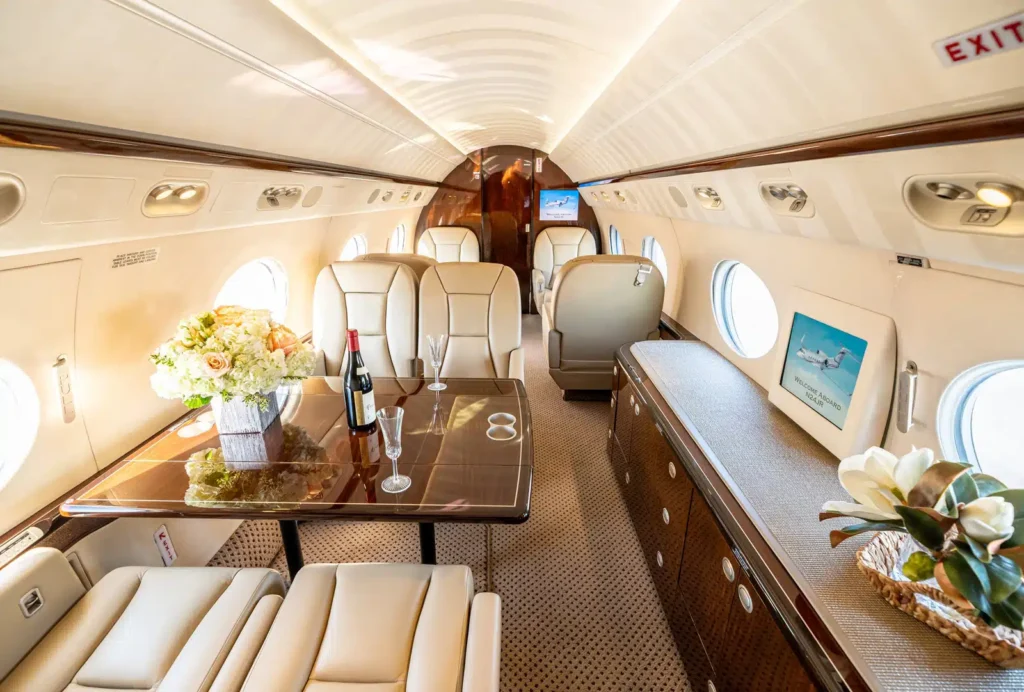
Today’s luxury private jet interiors are nothing short of spectacular, designed to be both functional for work and indulgent for relaxation. Stepping into a top-of-the-line private jet, you might find yourself in a cabin that feels more like a high-end hotel suite or a corporate boardroom than an airplane. Common private jet amenities include plush leather seats that can recline and swivel, often converting into lie-flat beds for overnight flights. Many jets feature divans (sofas) and club-four seating arrangements, allowing executives to hold meetings around a table. In larger jets, you’ll find fully equipped galleys where flight attendants can prepare gourmet meals – everything from espresso bars to ovens for freshly baked entrees. Fine china, crystal glassware, and bespoke catering menus are standard on luxury charters.
Entertainment is also a focus: expect large TV screens with on-demand movies, premium sound systems, and sometimes even 3D flight maps or video conferencing systems. Privacy is considered in the design, too – many cabins have partitions or even private rooms. For instance, ultra-long-range jets often feature a master bedroom area at the rear, complete with a proper bed and en-suite bathroom. Indeed, some of the larger jets come with enclosed staterooms and even full-fledged showers on board. This means you could take off from New York in the evening, enjoy a hot shower and a sleep in a real bed, and land in Europe in the morning feeling refreshed – an experience impossible to replicate in commercial first class.

Safest Private Jets in the Sky
Safety is paramount in private aviation, and top charter companies stake their reputation on maintaining the highest standards. All reputable charters adhere to the same FAA regulations that govern airlines, and often implement additional safety protocols. This includes strict pilot training regimens (many charter pilots are former military or airline pilots with thousands of hours of experience) and rigorous maintenance schedules for the jets. Elite operators will tout third-party safety ratings – look for those with ARGUS or Wyvern safety accreditations, or IS-BAO (International Standard for Business Aircraft Operations) certification, as these signify a strong safety culture. When evaluating the safety standards, it’s wise to ask charter providers about their safety audits and crew qualifications. The good news is that private flying, especially with vetted operators, is extremely safe. Charter jets often are newer and equipped with advanced avionics – think collision avoidance systems (TCAS), terrain awareness (TAWS), and satellite weather tracking that rival or exceed what commercial airliners have. They also have the advantage of flexibility: private pilots can choose to reroute or delay for weather more easily without the pressures airline schedules face, and in an emergency, a small jet can land at many more airports if needed.
As you plan your next trip, use this knowledge to evaluate providers. Private jet travel is about reclaiming your time and enjoying the journey on your own terms. With the right charter partner, flying private becomes more than just transportation – it becomes a first-class experience from takeoff to landing.
Sources
- TravelFreak – The 5 Best Private Jet Charter Companies
- Investopedia – How Much Is a Private Jet? Hourly Rates and Purchase Price
- Air Charter Service USA – Categories of Private Jets and Their Amenities
- JetChecked – Safest Private Jets
