

The allure of private jet travel lies in its exclusivity, convenience, and luxury. High-net-worth individuals are increasingly favoring private air travel for both business and pleasure, opting to bypass commercial airport hassles for a more personalized journey. In the United States, specific locales and routes have become synonymous with elite private aviation. This comprehensive guide explores popular private jet destinations across the country and provides tips on booking a private jet online.
Most Popular Private Jet Charter Routes in the U.S.
When it comes to private jet destinations in the U.S., a mix of bustling business hubs and exclusive vacation spots dominates the list. On the business side, New York and Los Angeles private jet charter consistently stand out as prime stops, offering a blend of financial power and entertainment industry draw. New York City is a magnet for Wall Street executives and international moguls, while Los Angeles caters to Hollywood elites and tech entrepreneurs. Other major cities, such as Chicago, Washington D.C., Dallas, and San Francisco, also experience significant private jet traffic for corporate travel and conferences, given their economic importance and the time-saving appeal of flying directly into smaller executive airports near downtown areas.
On the leisure side, America offers no shortage of high-end getaways that rank among the best private jet vacations. Miami, Florida, is a perennial favorite for its pristine beaches, vibrant nightlife, and luxury resorts – it perfectly blends tropical leisure with a thriving business scene. Las Vegas private jet charter services draw clients year-round, not only for its casinos and entertainment, but also for exclusive events like championship fights and celebrity residencies. In the winter months, the jet-set flock to Aspen, Colorado, a premier ski retreat with world-class slopes and upscale après-ski lounges. Aspen’s allure extends into summer as well, offering mountain vistas, arts festivals, and outdoor activities for affluent travelers looking to escape the heat. Similarly, Jackson Hole, Wyoming, and Vail, Colorado, welcome private flyers for both winter skiing and summer wilderness adventures, highlighting their year-round appeal.
East Coast elites often head to The Hamptons on Long Island or the idyllic Nantucket, Massachusetts, for summer escapades. These seaside enclaves are synonymous with exclusivity – one can land at East Hampton Airport or Nantucket Memorial Airport and be minutes from beaches, boutiques, and gourmet dining. Other warm-weather favorites include Palm Beach, Florida, especially in winter as a refuge for snowbirds, and Key West, Florida, for a tropical island vibe without leaving the U.S. mainland. In wine country, Napa Valley and Sonoma County, California, attract oenophiles who fly in for private vineyard tours and farm-to-table dining. And not to be overlooked, Telluride, Colorado, and Park City, Utah, offer secluded luxury with stunning natural backdrops, from alpine terrain to red-rock landscapes.
Featured International Destinations Accessible by Private Jet
For private jet travelers seeking experiences beyond U.S. borders, a world of remarkable international destinations awaits—each offering a unique blend of luxury, exclusivity, and cultural intrigue. Iconic cities such as Paris, London, and Dubai are perennial favorites, all boasting direct access via major international airports with dedicated FBOs (Fixed-Base Operators) that ensure seamless, discreet arrivals. Paris Le Bourget, for example, is Europe’s busiest private jet airport, placing travelers within minutes of the city’s famed art, gastronomy, and shopping. London’s Farnborough and Luton airports provide similar convenience, catering to business executives and leisure seekers drawn by the city’s vibrant culture and historic landmarks. Dubai International’s VIP terminals make arrivals effortless for those eager to explore the city’s blend of futuristic architecture, luxury shopping, and world-class resorts.
Beyond the urban capitals, executive jet charter opens doors to exclusive island retreats and remote wonders. The Maldives, with its turquoise atolls and overwater villas, is a top pick for privacy and relaxation—most resorts offer private transfers from Malé International Airport, ensuring a smooth transition from jet to paradise. St. Barts in the Caribbean is another jet-set favorite, renowned for its upscale villas, designer boutiques, and lively beach clubs; its small airport accommodates private aircraft, making it ideal for those seeking both glamour and seclusion. Meanwhile, destinations like Teterboro’s international counterpart, Geneva, Switzerland, offer access to the Alps for luxury ski holidays, as well as proximity to Europe’s financial and diplomatic hubs.
Luxury and Experiential Jet Tours
These curated journeys are crafted for those who value exclusivity, seamless service, and immersive experiences, transforming private air travel into a once-in-a-lifetime adventure. Below are some key features:
- All-Inclusive, Multi-Destination Expeditions: Luxury jet tours often feature all-inclusive packages that whisk guests across continents in the utmost comfort. These expeditions typically include private jet charter flights, five-star accommodations, gourmet dining, and exclusive excursions at each stop. Travelers can visit iconic landmarks, remote wonders, and cultural hotspots—all seamlessly connected by private jet, eliminating the stress of commercial travel and maximizing time spent enjoying each destination.
- Expertly Crafted, Unique Itineraries: Unlike traditional vacations, experiential jet tours are meticulously planned by travel experts to offer unique, themed itineraries. Guests might embark on a world culinary journey, an art and history exploration, or an adventure to UNESCO World Heritage sites. These itineraries are designed to provide insider access, including private museum tours, meetings with local artisans, and after-hours visits to famous attractions.
- Personalized, Seamless Service: A hallmark of luxury jet tours is the attention to personalized service. Dedicated journey managers, expert guides, and onboard staff cater to every need, from customized in-flight menus to tailored experiences on the ground.
- Access to Extraordinary Experiences: These tours go beyond standard sightseeing, offering privileged access to experiences not available to the general public. Whether it’s a private dinner in a historic palace, a helicopter ride over natural wonders, or behind-the-scenes access to cultural events, travelers are treated to moments that are both rare and unforgettable.
For private jet travelers who seek to elevate their journeys, curated luxury and experiential jet tours represent the pinnacle of travel. They blend comfort, exclusivity, and adventure, opening doors to the world’s wonders in a way that only private aviation can provide.
The Cost of Private Air Travel: What to Expect
Flying private is undeniably a luxury, but understanding charter plane flights can help travelers make informed decisions and maybe even find value in the experience. Unlike commercial airline tickets, which are priced per seat, private jet pricing is typically per plane. A key metric is the hourly rate of the aircraft. A private flight cost can range widely depending on the size and type of jet: for example, renting a small turboprop or very light jet might cost around $2,000 to $4,000 per flight hour, whereas a large cabin or ultra-long-range jet (think Gulfstream G650 or Global 7500) could run $8,000 to $14,000+ per hour. These rates generally include the aircraft, crew, standard fuel, and insurance, but may not always cover extras such as catering, landing fees, or overnight charges, which can be added to the bill.
Consider a Los Angeles to New York jet charter. On a super-midsize jet, at perhaps ~$7,000 per hour, the charter jet cost might be on the order of $35,000–$45,000 for that single trip. A shorter hop like a jet charter NYC to Miami on a light jet might come in around $12,000–$15,000. Prices fluctuate with demand and positioning needs. If the plane isn’t based at your departure airport, you may pay for it to reposition from elsewhere (or to return empty if you don’t book a round-trip ticket). Many charter quotes thus include a certain amount of repositioning in the price; when you charter one-way, the operator often needs to cover the “empty leg” either by finding another customer or charging it as part of your fee.
Several factors drive the cost beyond just flight time. Aircraft size and category are primary: larger jets have higher base costs but can carry more passengers and fly farther without refueling. Distance and itinerary complexity also matter – flying between well-traveled cities with many available jets is often cheaper than to a remote area where a plane might have to come from far away. If your trip requires the aircraft to wait for you, you’ll incur daily minimums or overnight fees to retain the crew and aircraft. Airport fees and handling charges can be notable at certain places. And then there are taxes: in the U.S., a Federal Excise Tax of 7.5% applies to domestic charters, plus nominal per-leg fees.
For those exploring membership or fractional programs, costs come in different forms – e.g., a jet card might require an upfront deposit of $150,000 that translates into a fixed hourly rate for a set number of hours, while fractional ownership involves a capital purchase plus monthly management and occupied hourly fees. These can be cost-effective if you fly very frequently, but on an hourly basis, they still align with those broad ranges. One often-asked question is how many people can come along for that price. Generally, the charter cost remains the same whether you have 1 passenger or 6 (for a light jet) or up to 14 (on a large jet), as it’s primarily determined by the aircraft.
There are ways to mitigate costs for the flexible traveler. Empty leg flights (when an aircraft repositions empty for its next charter) can be booked at discounts of 25-75% off the normal price, though they come with the risk that the flight may be canceled if the primary charter changes plans. Some platforms now publish empty legs or allow you to request one through an app. One-way pricing has also become more common among larger charter companies. In the past, many charged round-trip by default; however, providers will often quote true one-way rates if possible, especially in busy corridors where another customer might use the return.
Onboard Experience: The Best Private Jet Amenities
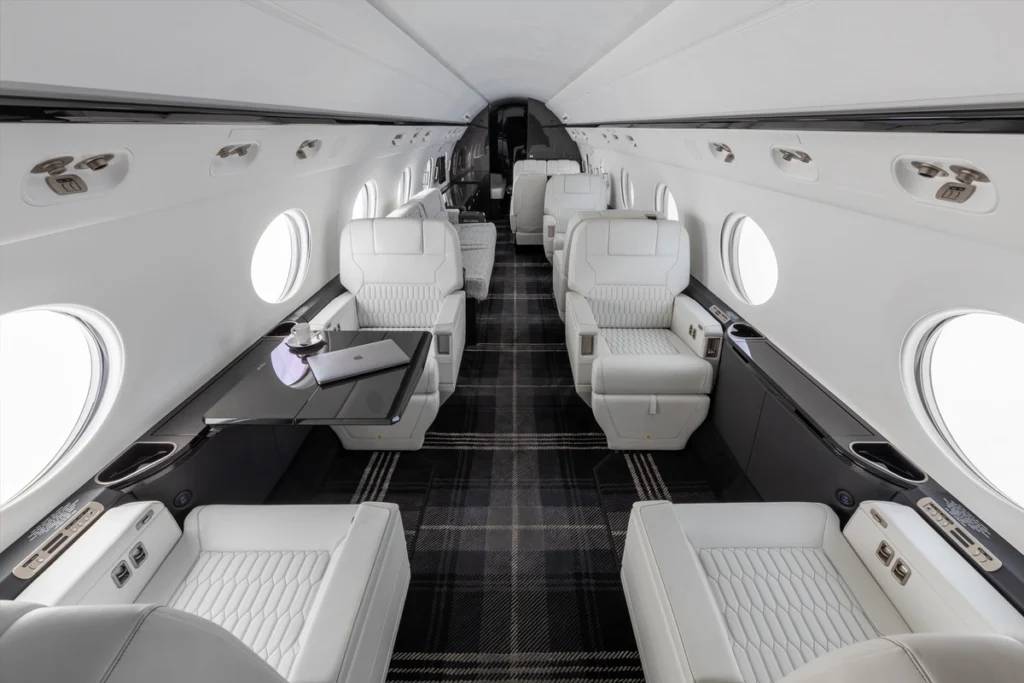
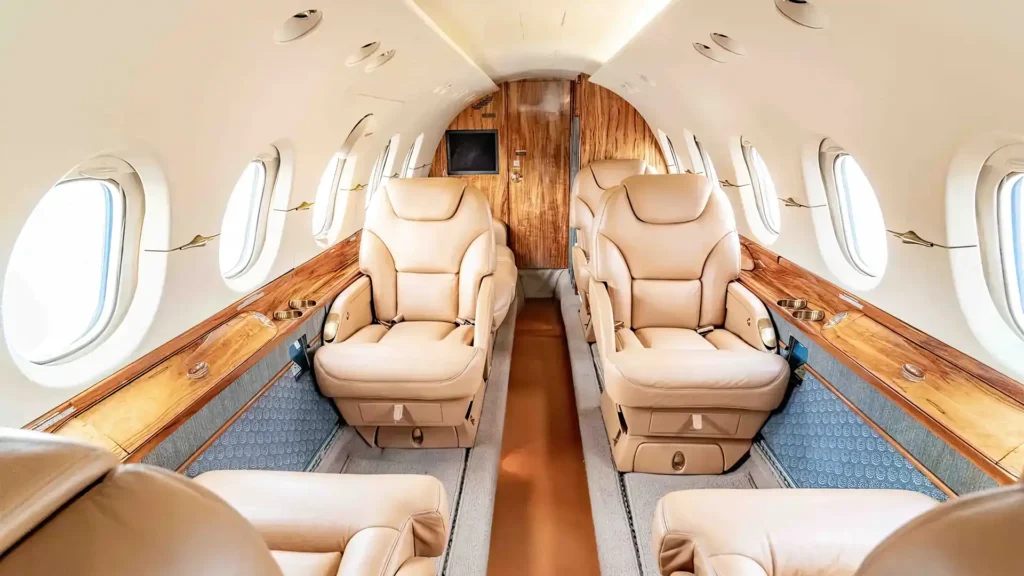
One of the hallmarks of private jet travel is the superior in-flight experience. From the moment you step aboard, it’s a world of comfort and personalization that commercial first class can hardly rival. The best private jet amenities start with the cabin itself. Private jet interiors are often designed by top luxury brands or bespoke craftsmen, featuring plush leather seats, fine wood or carbon-fiber finishes, and layouts optimized for both productivity and relaxation. Seats typically have generous legroom and the ability to swivel or fully recline. In many light and midsize jets, club seating (facing pairs of seats) allows for easy conversation or meetings in the sky. Larger jets offer divans (sofas) and even private compartments. Certain heavy jets provide accommodations comparable to a luxury hotel suite – think full-size beds, stand-up showers, and even master bedrooms on ultra-long-range aircraft like converted airliners. It’s not an exaggeration: some private jet models include enclosed staterooms with queen-size beds, spacious lavatories with walk-in showers, and separate lounge areas or conference tables.
Entertainment and connectivity are top-tier as well. Most private jets have onboard Wi-Fi, allowing passengers to stream movies, conduct video conferences, or simply catch up on email. Many have Airshow moving map displays to track flight progress, and integrated media systems with large flat screens for watching films or presentations. If a VIP wants to watch their favorite sports game live, the crew can often arrange for the channel to be broadcast through satellite TV. Some jets even come with specialty amenities: for instance, Bombardier’s Global series and Gulfstream’s G650/700 have ultra-quiet cabins and advanced air filtration that keeps humidity comfortable and reduces jet lag. Emirates’ private A319 jet famously had a shower spa for its charter clients, and other VIP airliners (like converted 757s or 787s) may have boardrooms or even exercise equipment. While those extremes are not on every jet, even a typical super-midsize aircraft will offer a serene environment: fully lie-flat seats or divans that turn into beds, multiple climate zones for personalized temperature, and ample space to move about.
The little things also elevate the journey. Noise-cancelling headsets, a library of the latest magazines and books, and on some flights, curated gift bags or amenities. Windows in modern private jets are larger than those on airliners, providing panoramic views and ample natural light; some new models even feature virtual skylights. The lavatories are typically stocked with high-end toiletries, and having a private restroom for your group (or multiple, on large jets) is itself a luxury.
Booking a Private Jet Online: Tips for Planning Luxury Charter Flights
Chartering a private jet used to be a complex endeavor, but today it’s increasingly user-friendly. In fact, thanks to rising competition and digital platforms, booking a private jet has never been easier. Still, arranging luxury charter flights comes with its own set of considerations to ensure a smooth and satisfying trip. Here are some expert tips:
- Start with a Trusted Platform or Broker: When using these, ensure the company is reputable – look for indications of ARGUS or Wyvern safety ratings and read reviews. In many cases, even if you book through an app, a human representative will follow up to confirm details, which is good for peace of mind. If you prefer personal service, consider contacting a charter broker directly. A good broker acts as your agent, finding the best air charter service for your needs and handling logistics. They can explain the differences between aircraft, coordinate catering, and manage contracts and insurance certificates. The key is to communicate your requirements clearly: dates, route, passenger count, any luggage or pets, and special requests. This will yield more accurate quotes.
- Compare Quotes and Aircraft: It’s wise to get a few quotes, especially if you’re new to private flying. Prices can vary significantly between providers for the same route, due to positioning or fleet differences. When comparing, note the aircraft type – a newer or larger jet might be a bit pricier but could offer a faster flight or more space. Also, clarify what the quote includes. Does it cover all taxes, fuel surcharges, and fees? Are there potential extra costs? A transparent provider will outline these. Don’t shy away from asking questions like:
- Book Early for Peak Times: As discussed, demand soars around holidays and big events. To secure your preferred aircraft during Christmas/New Year’s, spring break, or midsummer weekends, try booking several weeks in advance. Some ultra-high-demand dates (e.g., around the Super Bowl or Art Basel) see planes fully booked and prices climbing. Early booking not only guarantees you a plane but sometimes locks in better rates before last-minute premiums hit
- Leverage Membership Programs if Appropriate: If you plan to fly private frequently, look into jet cards or memberships. These require an upfront commitment but offer benefits such as fixed hourly rates, guaranteed availability, and simplified booking. For example, with a jet card, you could make a reservation 24 hours ahead and have a plane assured at a known rate. This can significantly reduce the variability and stress associated with booking each trip. However, if you’re an occasional traveler, an on-demand charter will likely be more cost-effective.
- Understand the Policies: Before finalizing, review the contract’s fine print. Know the cancellation terms. Check the allowed baggage. Ensure you have necessary travel documents if flying internationally – while you skip the commercial terminal, you still must comply with customs/immigration requirements at the FBO. The charter company will usually guide you on this.
- Day of the Flight – Be Time Aware: One huge advantage is that you don’t need to arrive two hours early. Typically, showing up 15-30 minutes before departure is sufficient. However, don’t cut it too close – if you’re significantly late, you could incur additional costs or interfere with airport slot times. That said, if you are early, the jet will often be ready to depart as soon as you are. Many private flights depart ahead of schedule because all passengers have arrived – another perk of having the plane to yourself.
With a bit of research and the right partners, arranging a private charter can be nearly as easy as booking a hotel – yet infinitely more rewarding when you bypass the crowded airports and fly directly to your destination on your schedule. It’s the ultimate way to travel on your terms, and now it’s just a few clicks away.
The choice to fly private is about valuing time and experiences. It’s about landing closer to your destination, on your own schedule, enveloped in comfort – whether that means closing a deal at 40,000 feet or sipping champagne en route to a five-star resort. For those who can choose their destination, these top private jet destinations across the U.S. offer the best of both business efficiency and vacation indulgence. Safe travels and blue skies!
Sources
- Private Jet Card Comparisons – 2022’s 30 Biggest Private Jet Companiesprivatejetcardcomparisons.com
- Flying Magazine – How to Charter a Private Jet in 5 Stepsflyingmag.com
- BLADE – Semi-Private Jet Flights (FAQ Section)blade.com
