

Chartering a private jet for the first time is an exciting venture that unlocks a new level of convenience and luxury in air travel. Private aviation has grown significantly in recent years – for example, the number of private flights rose by 11% in 2022 compared to the previous year. Flying private allows you to skip crowded terminals and long security lines, providing a personalized experience. This guide will explain how private jets work in the charter context and how to get the best value, catering to all travelers.
How Private Jet Charter Works
When you charter a private jet, you are essentially renting an entire aircraft for your personal use, rather than buying seats on a scheduled flight. This means you control the schedule and choose who joins you on board – whether it’s colleagues, friends, or family. Private jets typically operate out of Fixed-Base Operators (FBOs) or private terminals at airports, allowing you to avoid busy main terminals. You can often arrive just 30 minutes before your departure and still make your flight with time to spare, thanks to minimal check-in formalities.
Another benefit of private aviation is the ability to use a wide range of airports, including smaller regional airports that may be closer to your actual destination. Commercial airlines are limited to major hubs, but private jets can land at thousands of smaller airports, cutting down ground transfer times. You also set the flight schedule to your needs, which is a huge advantage for busy travelers. The entire experience is tailored to you, from departure time to in-flight preferences, which is why it’s considered the pinnacle of luxury air travel.

Types of Aircraft and Fleet Options
Choosing the right aircraft is crucial for a successful private jet experience, as multiple categories cater to diverse needs. Light jets, including popular models like the Cessna Citation CJ3 and Embraer Phenom 300, are ideal for shorter flights up to three hours, typically accommodating four to six passengers comfortably with limited luggage space. For midsize journeys, ranging around four to five hours, midsize jets such as the Hawker 800XP or Learjet 60 offer improved cabin comfort, seating six to eight passengers with enhanced amenities. Super midsize aircraft, such as the Gulfstream G280 and Citation Sovereign, bridge the gap between midsize and large jets, delivering transcontinental range and ample cabin space for eight to ten passengers. For intercontinental and long-haul flights, large-cabin jets, including the Dassault Falcon 7X and Bombardier Global 6000, feature spacious interiors, luxury seating configurations, full-service galleys, and sleeping arrangements, accommodating up to sixteen passengers comfortably.
To arrange a private charter, you generally work with a jet charter service or broker. These professionals match your travel needs (route, dates, number of passengers, etc.) with an appropriate aircraft from a network of vetted operators. It’s wise to conduct thorough research on the charter company or broker you plan to use, checking their safety certifications, pilot qualifications, and customer reviews. Reputable providers will be transparent about their aircraft’s maintenance and the crew’s credentials. A reputable charter broker or company will guide you through the process, helping you select the ideal size plane and services for your trip.
Cost of Private Jet Charter
The private jet rental cost per hour can vary significantly depending on the aircraft type and other factors. Generally, smaller planes are cheaper and larger jets are more expensive. As a ballpark, chartering a small turboprop or light jet might cost around $2,000 to $4,000 per flight hour, a midsize jet around $4,000 to $8,000 per hour, and a large cabin or long-range jet around $8,000 to $14,000 per hour. For ultra-large executive airliners (the VIP-configured airliners), rates can go even higher, on the order of $15,000 to $20,000+ per hour for the biggest private jets. These base hourly rates typically include the aircraft, pilots, crew, standard fuel, and insurance costs.
It’s important to note that the private flight cost you are quoted covers the whole plane, not per passenger. In other words, when you book a private jet service, you pay to rent the entire plane for your group. Whether you fly alone or with seven other people, the total charter price is the same – you’re just dividing it among the passengers if you choose. This means if you fill all the seats on a jet, the per-person cost can sometimes approach what a first-class ticket might cost for each of you. However, if you’re flying solo, chartering will almost always be more expensive than commercial first class, especially on long routes.
Besides the hourly flying rate, additional fees can apply. Common cost factors include repositioning fees, overnight crew charges, landing and handling fees at airports, and taxes. In the U.S., for example, charter flights incur a 7.5% Federal Excise Tax on domestic legs. Your charter quote should outline these specifics. It’s a good idea to request an all-inclusive quote upfront so you understand the total private charter price. Reputable charter providers will detail what is included. Keep in mind that popular events or destinations can drive prices up due to high demand, and one-way trips may sometimes carry a re-positioning charge.
Typically, once you agree to a quote, you’ll sign a contract and provide payment (often upfront or a deposit). Charter companies may accept wire transfers or credit cards. Ensure you review the contract’s terms regarding cancellations or rescheduling. Also, clarify if the price is fixed or subject to change if, say, you decide to upgrade aircraft or add stops.
Popular Destinations
Business travelers frequently fly private to key commercial hubs such as New York, London, Singapore, and Dubai, leveraging the convenience, privacy, and flexibility to accommodate tight schedules and sensitive meetings. Leisure travelers often favor luxurious vacation spots, such as the Caribbean islands, Aspen, the French Riviera, and Italy’s Amalfi Coast, where private jets provide direct, hassle-free access. Additionally, specialized medical charters provide quick transport to renowned healthcare centers, ensuring comfort, privacy, and timely care during critical situations. Major events, such as the Super Bowl, Cannes Film Festival, Monaco Grand Prix, and the World Economic Forum in Davos, also attract substantial private jet traffic, allowing attendees to bypass congested commercial airports and ensure punctual arrivals. The versatility of private aviation enables passengers to optimize their travel time and enjoy tailored experiences at premier destinations worldwide.
Preparing for Your First Private Flight
A bit of preparation will ensure everything goes smoothly. Flying private is more relaxed than commercial flying, but it still has protocols to follow. Here’s what to know and do before you head to the airport.
- Documents and ID: Even though you’re flying out of a private terminal, you still need proper identification. Ensure you bring a government-issued photo ID (like a driver’s license) for domestic flights, and a passport for international travel. Visa requirements still apply for international trips, so check those in advance just as you would for an airline flight. Provide your charter company with your full name (matching your ID) and the same for any fellow passengers, as these will be on the passenger manifest.
- Packing and luggage: One perk of private aviation is a more generous luggage allowance – there are no strict weight limits or baggage fees like commercial airlines. However, space on the aircraft is the limiting factor. The amount of baggage you can bring depends on the size and model of the jet and the number of people flying. For example, a very light jet might only hold a few small suitcases, whereas a large cabin jet has room for multiple large bags. If you plan to bring unusually large or heavy items or a lot of luggage in general, inform your charter provider in advance. They can either suggest a suitable aircraft with ample cargo space or make special arrangements. Unlike commercial flights, you won’t have to pay extra for bags, and you can often bring things on a private jet that are cumbersome on airlines. Bringing pets is a common part of the private jet experience – most charter companies allow pets in the cabin with you, as long as you have their vaccination records and any paperwork required for your destination.
- Special requests: Since this is luxury air travel, don’t hesitate to inform your charter service of any special requests or needs. Charter companies can arrange ground transportation to meet you planeside, catering of specific meals, or amenities like child seats or even in-flight nannies, depending on your needs.
Etiquette and Onboard Experience
Flying on a private jet is more casual and comfortable than flying on an airline, but there are still etiquette points to consider to ensure a smooth flight. Here are some tips on private jet etiquette and what to expect on board:
- Dress code: There is no strict dress code when you fly private. You can generally wear whatever you feel is appropriate for your trip. Many travelers opt for smart casual attire. If you’re flying for business, you may want to dress in business attire, whereas for a family vacation, jeans or leisurewear are fine. Neat attire shows respect, but formal wear isn’t necessary unless your occasion demands it.
- Interaction with crew: You will have a small crew dedicated to your flight – usually one or two pilots, and on some flights, a flight attendant (especially for larger jets or longer flights). Treat your crew with the same respect you would any professional. The captain will likely give a short safety briefing before takeoff, covering seatbelt use, emergency exits, and other protocols. Pay attention to this briefing just as you would on a commercial flight; it’s for your safety. During the flight, you’re free to relax, but always follow any instructions from the pilots or attendants. It’s good etiquette to keep the cabin tidy and use the facilities respectfully. Unlike commercial flights, you can probably visit the cockpit once at cruising altitude if you ask and the pilots agree, but never during critical phases like takeoff or landing.
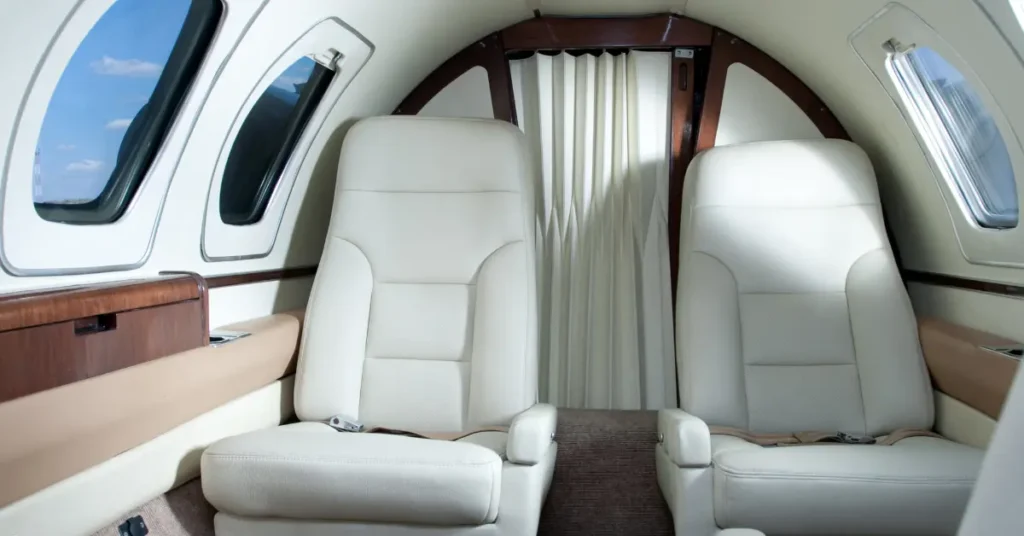
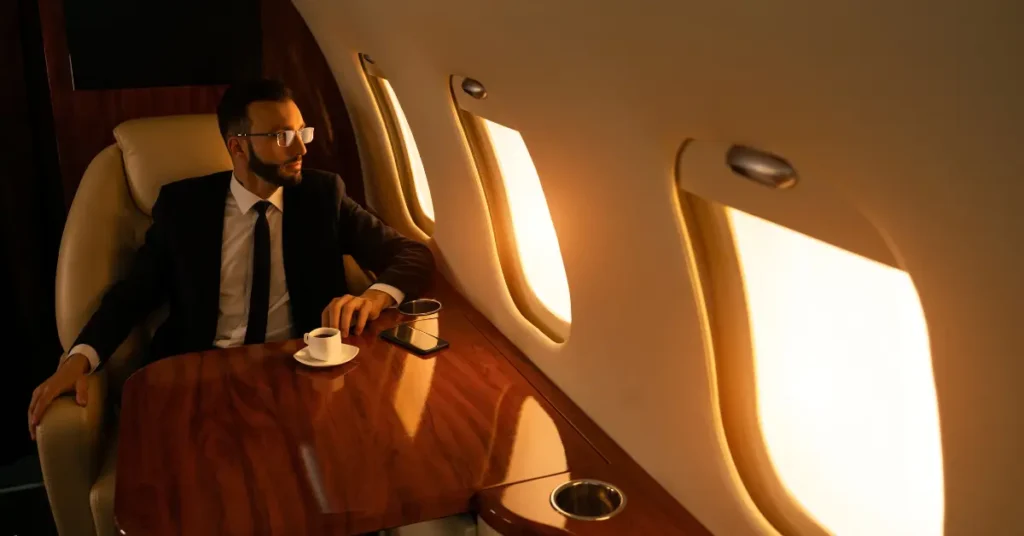
- Amenities and entertainment: Modern private jets often come with amenities that make the journey enjoyable. Many charter jets offer complimentary Wi-Fi, allowing you to work or stream entertainment at your leisure. You’ll typically find plus,h comfortable seats (often able to recline fully or swivel), and sometimes couches or beds on larger jets. Feel free to enjoy the space – one big perk is privacy and room to move. You won’t have strangers next to you, and you can spread out in the cabin. If you have any entertainment needs, you can ask in advance or bring your own devices.
- Food and drink: If you requested catering, hot meals, or specific foods, they may be served on board. Otherwise, expect a selection of snacks and beverages to be available. You can always ask the attendant or pilots (if no attendant) for coffee, drinks, or whatever refreshments are stocked. Most private flights allow alcohol, but it’s best to consume it in moderation. One etiquette point: treat the aircraft as if it were your own or a friend’s living room. The crew will tidy up, but basic courtesy goes a long way.
- Use of devices: You typically can use your electronics on a private jet with fewer restrictions; often, there’s no requirement to switch off phones entirely. Always ask the crew if you’re unsure. Many people take advantage of private flights to work on laptops or hold confidential meetings, thanks to the secure and private environment.
- Lavatory: Most private jets have a lavatory on board, but the size and privacy vary. Smaller jets and turboprops might have a compact restroom or even just a curtained-off toilet area, whereas midsize and larger jets will have an enclosed lavatory with a sink. If you’re flying on a very small aircraft, ask about the facilities in advance if that’s a concern. As a courtesy, try to leave the lavatory as clean as you found it, since only your party is using it.
- Behavior and courtesy: One advantage of a charter flight is that you and your group set the tone – you can be business-like, have a strategy meeting in the air, or you can kick back and celebrate with music. Just be mindful of the crew and aircraft. Smoking policies vary by operator and aircraft; many private flights are non-smoking, so confirm beforehand if you wish to smoke. Loud behavior isn’t usually an issue if you’ve chartered the whole plane, but remember the pilots still have a job to do, so extremely rowdy behavior is not appropriate.
By following these guidelines, you’ll ensure a pleasant flight for both you and the crew. Private jet travel offers a level of freedom, allowing you to customize the experience as you like.
Getting the Best Value: Deals and Tips for Flying Private
There are ways to make it more cost-effective or to fly private cheaply relative to normal pricing. If you’re price-conscious or looking for last-minute private jet deals, consider the following:
- Empty leg flights: One of the best-kept secrets for discounted private travel is booking empty legs. An empty leg is a private jet flying empty, usually because it’s returning to base or repositioning for its next charter. Rather than fly with no passengers, operators often sell these one-way flights at steep discounts – sometimes 50-75% off the normal charter price. For example, if a one-way charter from City A to City B costs $20,000, the empty return flight might be offered for only $5,000 to $10,000. These deals can let you experience a private jet at a fraction of the usual cost. However, empty legs come with caveats. They are usually announced on short notice and are fixed in terms of origin, destination, and timing.
- Shared charters and by-the-seat programs: A growing segment of private aviation is semi-private jet charter services, where you can book just a seat, rather than the whole jet. Companies may sell individual seats on scheduled private flights (for example, a commuter route popular among executives, or shuttles to events). The cost is higher than commercial business class but lower than chartering a solo flight.
- Membership programs and jet cards: If you anticipate flying private frequently (even after your first charter experience), look into jet card memberships or fractional ownership programs. These require upfront deposits or hourly packages (for instance, buying 25 hours of flight time in advance), but they often guarantee aircraft availability and set hourly rates. For someone flying under ~10 hours per year, on-demand charter (pay-as-you-go) is usually the best option.
- Book smart: To get the best price on a charter, try to plan your trips in advance when possible. Last-minute on-demand charters can sometimes cost more, especially if aircraft need to reposition for you. By booking early, you allow the charter company to optimize logistics, which can lower costs. Also, be open with your provider about your flexibility – if your dates can slide a bit or if you could use a slightly different airport, you might save money. Always compare quotes from multiple sources. Prices can vary, and one broker might have a better connection or an empty leg match that another doesn’t. Just ensure you’re comparing apples to apples.
- Consider round-trip vs one-way pricing: If you need to go somewhere and return fairly quickly, ask about a round-trip or same-day discount. Chartering the plane for a same-day round trip might be cheaper than two separate one-ways, because the operator doesn’t have to reposition or find another customer for the interim.
- Leverage your broker’s knowledge: A good charter broker can be your ally in saving money. They might know of aircraft with empty legs or transient planes that fit your route. They can also advise if flying out a day earlier or later could tap into a better rate. Since brokers earn a commission, they want your repeat business and will often work to find you the best value and a reliable operator.
Many travelers who thought these options were out of reach have managed to book a private flight by taking advantage of empty-leg deals or sharing flights, making private aviation accessible to more people.
Taking a private jet for the first time is a memorable experience. You’ll enjoy unparalleled convenience, privacy, and comfort that redefine what it means to travel. By understanding the basics of how charters work, being aware of costs and etiquette, and knowing a few insider tips, you’re well on your way to a smooth first private flight. Remember that the world of private aviation caters to all travelers – whether you’re a business executive on a tight schedule, a family seeking a hassle-free vacation flight, or anyone who values a tailored travel experience. If you’re feeling unsure, consulting with experts can be helpful. JetVision Group is a global private jet charter provider with over 20 years of expertise, catering to all travelers with bespoke services and can guide first-timers through every step of the journey. With the right preparation and the support of a trusted charter service, your first trip is likely to be the first of many, as many find this mode of travel truly addictive once they try it.
Sources
- Latitude 33 Aviation – “Tips for First-Time Flyers on a Private Jet.” Useful for differences between private and commercial flying and etiquette tips l33jets.coml33jets.com.
- Paramount Business Jets – “Private Jet Rental Cost.” Provides data on hourly charter rates by aircraft category and cost factors paramountbusinessjets.comparamountbusinessjets.com.
- Investopedia – “Private Jet Charter vs. First-Class: What’s the Difference?” Offers perspective on costs and differences in experience vs commercial first class investopedia.cominvestopedia.com.
- FlyUSA – “5 Tips For First-Time Private Jet Charter Passengers.” Covers practical first-time questions on arrival, ID, luggage, and tipping etiquette flyusa.comflyusa.com.
- The Points Guy – “Yes, you can fly private — here’s the secret that will help you do it.” Explains empty leg flights and how they can be up to 75% cheaper, with caveats thepointsguy.comthepointsguy.com.
- Private Jet Card Comparisons – “Private Jet 101: First-Timers Guide.” (2021) Offers insight on when to use on-demand charter vs memberships, and emphasizes the value of good brokers privatejetcardcomparisons.comprivatejetcardcomparisons.com.
